
 Available in GB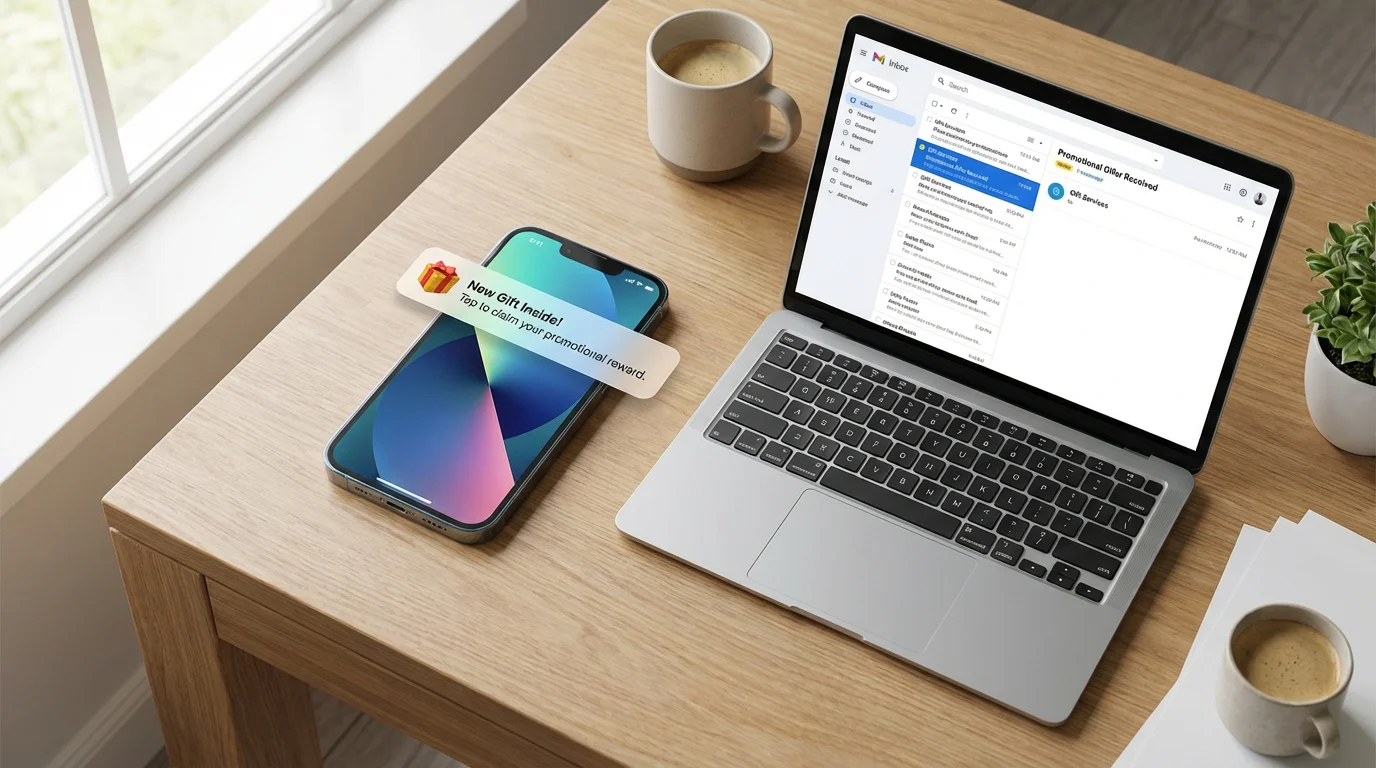
The Promotions That Come to You
Most casino bonuses require you to go looking for them — browsing comparison sites, checking promotions pages, registering at new casinos. But a category of offers works the other way around: promotions delivered directly to your inbox or phone via email and SMS. These are targeted campaigns sent by casinos you’ve already registered with, and they can include no deposit free spins, bonus cash, reload matches, cashback deals, and tournament invitations that aren’t publicly listed on the casino’s website.
Email and SMS offers are part of the casino’s retention marketing strategy. The operator knows you’ve registered, knows your playing history (or lack thereof), and tailors the promotion to encourage a specific behaviour — usually a return visit if you’ve been inactive, or a deposit if you’ve been playing with bonus funds only. The offers are personalised, which means two players at the same casino may receive different promotions based on their account activity.
The value of these offers varies widely. Some are genuinely better than the publicly available promotions — lower wagering requirements, higher match percentages, or exclusive no deposit spins. Others are repackaged versions of standard offers with marginally different terms. And a subset — particularly unsolicited messages from unfamiliar senders — are spam or phishing attempts with no legitimate casino behind them. Knowing how to receive good offers, evaluate them, and distinguish them from noise is worth the attention.
Recommended online casinos
- SpinFormulaBonus: 550% Up To £15,000 + 550 FS · Payout speed: 1-3 business days
- NightWinBonus: £900 + 400 free spins · Payout speed: 1-3 business days
- WinBeastBonus: €5000 + 500 FS + €650 Freebet · Payout speed: 1-3 business days
- BritsinoBonus: Welcome Package – Get your £2,200 + 2,000 FS · Payout speed: 1-3 business days
- EvoSpinBonus: 125% up to €2500 + 125 Free Spins · Payout speed: 1-3 business days
- DieselwinBonus: Welcome Pack 250% up to £4000 + 200 FS · Payout speed: 1-3 business days
- ChanzeBonus: Slots Welcome Bonus #1 200% up to €500 · Payout speed: 1-3 business days
How to Get on the Right Mailing Lists
The most reliable way to receive casino email and SMS offers is to opt in to marketing communications when you register at a UKGC-licensed casino. During the registration process, you’ll be asked whether you want to receive promotional messages — typically with a checkbox or a toggle for email, SMS, and push notifications separately. Selecting yes adds you to the operator’s marketing list, which is the source of all legitimate targeted promotions.
If you initially opted out of marketing but later changed your mind, you can usually update your preferences in the account settings section of the casino’s website. Most operators allow you to enable or disable marketing channels at any time. Switching on email marketing after a period of inactivity may trigger a re-engagement campaign — the casino detects a returning player and sends a “welcome back” offer designed to bring you back to active play.
The offers you receive depend on your player profile. New registrants who haven’t deposited often receive aggressive no deposit bonuses designed to drive that first deposit. Players who deposited once and stopped receive reload bonuses or free spins aimed at reactivation. Regular depositing players receive loyalty-oriented promotions — cashback, tournament access, VIP upgrades. The casino’s CRM system segments players and tailors offers accordingly, which means the best promotions go to players whose behaviour the casino most wants to change.
A strategic observation: if you want to receive the most favourable retention offers, registering at a casino, claiming the welcome bonus, making a small deposit, and then going quiet for a few weeks often triggers the most generous re-engagement campaigns. The casino interprets your inactivity as potential churn and responds with escalating offers to win you back. This isn’t a guaranteed tactic — every operator’s CRM logic is different — but the pattern is common across the industry.
Legitimate Offers vs Spam — How to Tell the Difference
Legitimate casino email promotions come from operators you’ve registered with, use the casino’s brand name and domain consistently, and link to the casino’s official website. They address you by name (or at least by username), reference your account in specific terms, and include an unsubscribe link at the bottom. The offer itself will have terms and conditions either included in the email or clearly linked to a page on the casino’s site.
Spam and phishing messages look different. They typically arrive from unfamiliar senders or domains that don’t match any casino you’ve registered with. They may use vague or generic language — “Dear Player” rather than your name — and promote casinos you’ve never heard of with offers that sound too generous to be credible. “Claim your £500 free bonus now!” from an unknown sender is not a legitimate promotion. It’s either spam for an unlicensed operator or a phishing attempt designed to harvest your personal details.
Phishing emails deserve particular caution. These mimic the branding of legitimate casinos and ask you to click a link to “verify your account” or “claim your bonus.” The link leads to a fake website that captures your login credentials, payment details, or personal information. If you receive an email that looks like it’s from a casino you use but asks you to re-enter sensitive information, don’t click the link. Instead, navigate to the casino’s website directly through your browser and check your account from there.
SMS offers follow the same pattern. Legitimate texts come from sender names you recognise (the casino’s brand name or a consistent shortcode), reference your account, and link to the official site. Unsolicited texts from unknown numbers promoting gambling offers should be deleted without interaction. In the UK, you can forward spam texts to 7726 (the reporting service operated by mobile networks) to help identify and block spam sources.
Opt-In Rules and Your Rights Under UK Law
UK gambling operators are bound by data protection and direct marketing regulations that give you clear rights over what you receive and when. The Privacy and Electronic Communications Regulations (PECR) and the UK GDPR together establish the framework: operators cannot send you marketing emails or texts unless you’ve given explicit consent, and they must provide a straightforward mechanism for withdrawing that consent at any time.
When you register at a casino and opt in to marketing, you’re giving consent for that specific operator (and potentially its sister brands under the same corporate umbrella) to contact you with promotional content. The consent is granular — you might agree to emails but not SMS, or vice versa. The casino must respect these preferences and shouldn’t send messages through channels you haven’t consented to.
Withdrawing consent is your right at any point. Every legitimate marketing email must include an unsubscribe link, and clicking it should remove you from the mailing list within a reasonable timeframe — typically 28 days, though most operators process it within 48 hours. For SMS, replying “STOP” to the message should halt future texts. If an operator continues to send marketing after you’ve unsubscribed, they’re violating UK regulations, and you can report them to the Information Commissioner’s Office (ICO).
The Gambling Commission adds an additional layer of requirements. UKGC-licensed operators must not send marketing materials to self-excluded players, must respect GamStop registrations by ceasing all promotional contact, and must ensure that marketing doesn’t target vulnerable individuals. If you’ve self-excluded from a casino — either directly or through GamStop — and continue to receive promotional emails or texts from that operator, the casino is breaching its licence conditions. Report it to the Gambling Commission.
Inbox Offers Can Be Good — If You Filter Carefully
Email and SMS promotions from casinos you’ve registered with are a legitimate and sometimes valuable source of bonus offers. The best ones — personalised no deposit spins, reduced-wagering reloads, cashback on specific games — can be genuinely better than the publicly listed promotions on the casino’s website. They’re worth receiving if you’re comfortable managing the volume and applying the same evaluation criteria you’d use for any other bonus: check the wagering, check the cap, check the expiry.
The filtering is the key skill. Ignore anything from senders you don’t recognise. Delete messages promoting casinos you haven’t registered with. Treat every offer from a known casino the same way you’d treat a public promotion — read the terms before claiming, confirm the offer is real by checking your account dashboard, and don’t click links in messages that ask for sensitive information.
Opt in to marketing at casinos you trust and plan to use. Opt out when the messages stop being useful. Your inbox is a promotional channel, and like all channels, it works best when you control what flows through it.